
Medical review status: Medically reviewed by Dr. Sheetal Londhe · Plastic Surgeon, Pune · NMC Reg. No. 2005042532 · Maharashtra Medical Council Reg. No. 2005/04/2532 · Last reviewed: 14 NOVEMBER 2026.
People researching 360° VASER Liposuction in Pune often want to understand how the abdomen, waist, flanks and back may change after surgery. This guide explains the procedure, what before-and-after photographs can and cannot show, who may be considered for treatment, the recovery process, possible complications, alternatives and cost factors.
Important: Liposuction is surgery for selected areas of localised fat. It is not a treatment for obesity, a substitute for weight management, or a way to guarantee a particular waist measurement or body shape. The right procedure can only be decided after an individual medical assessment.
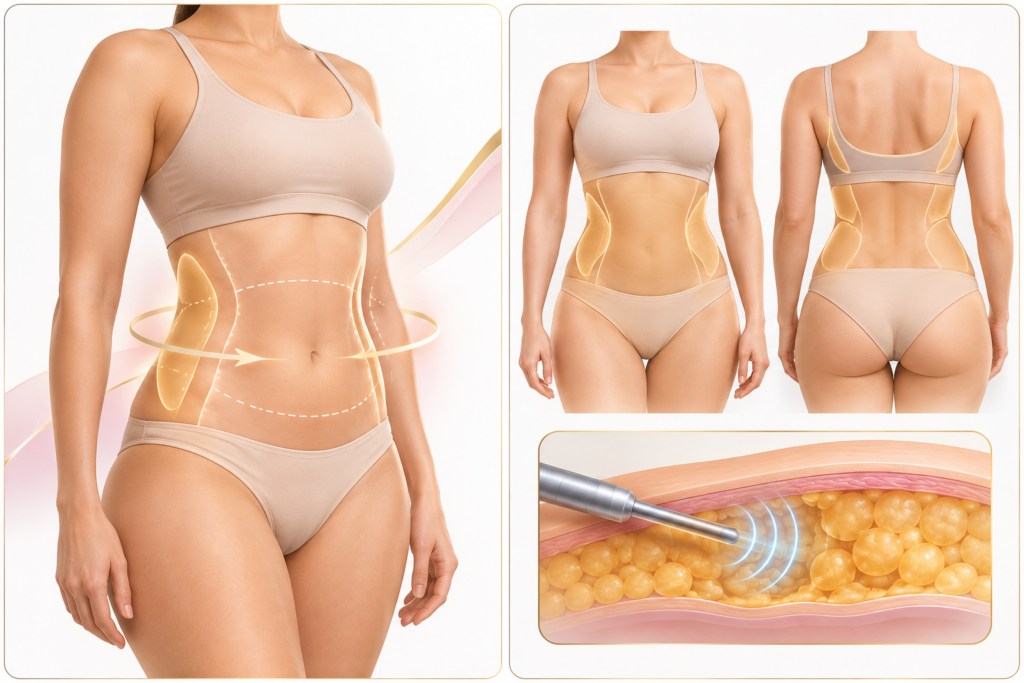
What Is 360° VASER Liposuction?
VASER is a form of ultrasound-assisted liposuction. In broad terms, ultrasound energy is used to help loosen or emulsify fat before it is removed through a cannula. The term 360° describes a circumferential body-contouring plan that may consider several areas around the torso rather than treating only the front of the abdomen.
Depending on anatomy and the agreed surgical plan, areas considered may include the upper and lower abdomen, waist, flanks (love handles), selected parts of the back and bra-line region. Not every patient needs or is suitable for treatment of every area.
VASER is a technology, while 360° describes the distribution of treatment areas. Ultrasound-assisted liposuction should not be assumed to produce better results or be safer than every other technique for every patient. The surgeon should explain why a particular method is appropriate in the individual case.
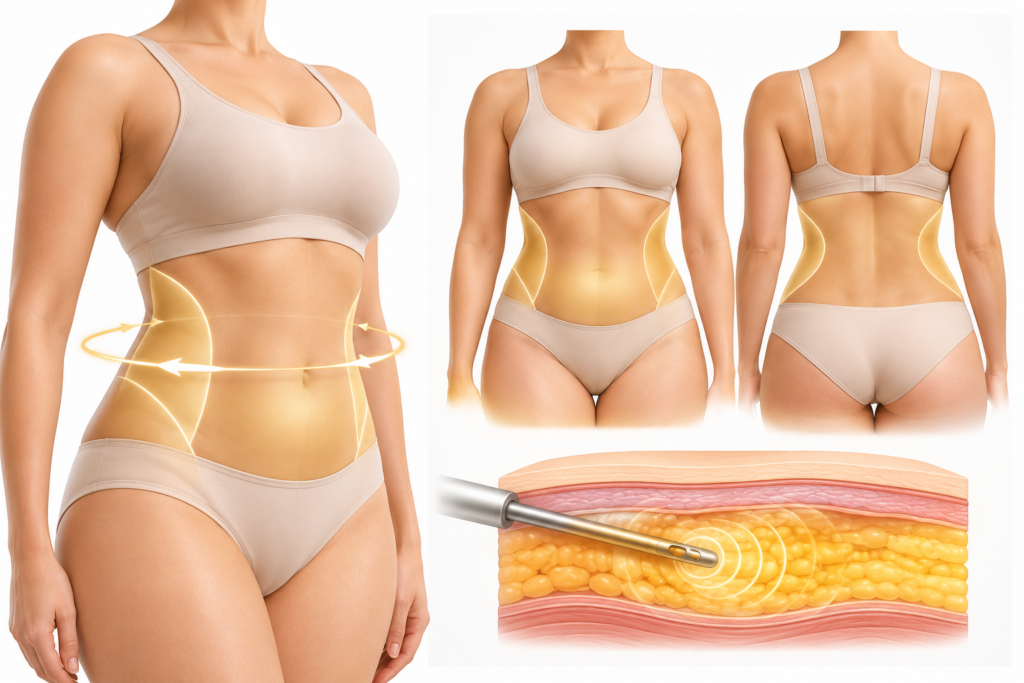
360° VASER Liposuction Before and After: What Changes May Be Seen?
When the patient is appropriately selected, liposuction may reduce selected localised fat deposits and change the contour of the treated area. Depending on starting anatomy and the plan, changes may be noticed around the abdomen, waistline, flanks and back. The degree of visible change differs between individuals.
What can influence the appearance of results?
- Starting anatomy: natural body proportions, fat distribution and muscle structure.
- Skin quality: elasticity, thickness, stretch marks and the amount of loose skin.
- Treatment plan: which areas are treated and the extent of surgery considered safe.
- Healing: swelling, bruising, tissue firmness and individual recovery.
- Weight stability: future weight changes can affect the contour.
Which Areas May Be Included in 360° Body Contouring?
1. Upper and lower abdomen
Selected fat deposits above and below the navel may be considered. Liposuction does not remove significant excess skin and does not repair separated abdominal muscles (diastasis recti). Where loose skin or muscle separation is a major concern, a tummy tuck assessment may be more relevant.
2. Waist and flanks
The sides of the waist and the areas commonly called love handles may be assessed as part of a circumferential plan. The surgeon must consider how the front, sides and back will transition after treatment.
3. Upper and lower back
Selected back or bra-line deposits may be included when appropriate. The amount and location of treatment depend on tissue thickness, skin quality, positioning and the overall operative plan.
4. High-definition contouring
In selected patients, a surgeon may discuss more detailed contouring around natural muscular landmarks. This approach is highly anatomy-dependent and is not suitable for everyone. It should not be presented as a guaranteed six-pack or muscle-definition result.
Who May Be a Candidate for 360° VASER Liposuction?
Liposuction is generally considered for adults with localised fat deposits who are at a reasonably stable weight and have health and skin characteristics that make surgery appropriate. Suitability is individual; no checklist can replace a clinical examination.
- Localised fat deposits that remain despite reasonable lifestyle measures.
- A stable weight and realistic expectations about contouring rather than major weight loss.
- Skin quality that may adapt adequately after fat removal.
- Medical fitness for the proposed operation and anaesthesia.
- Willingness to follow post-operative instructions and attend follow-up visits.
Smoking or vaping, certain medical conditions, medicines that affect bleeding or healing, previous operations, significant skin laxity, unstable weight and other health factors may alter suitability or timing. These must be discussed privately with the treating team.
Clinical Assessment: How an Individual Treatment Plan Is Decided
A responsible consultation should assess more than the amount of fat a person wishes to remove. The surgeon should take a relevant medical and surgical history, examine the areas of concern and discuss the benefits, limitations, alternatives and risks before a decision is made.
What the surgeon may assess
- Distribution and thickness of subcutaneous fat, including the areas proposed for treatment.
- Skin elasticity, laxity, scars and stretch marks.
- Abdominal wall condition, including possible muscle separation or hernia concerns where relevant.
- Medical history, prior procedures, current medicines, allergies, smoking or vaping and anaesthesia considerations.
- Whether the planned areas, operative duration and any combined procedures are appropriate for the patient’s health and recovery support.
- The patient’s priorities, understanding of limitations and willingness to accept possible complications or an alternative plan.
The consultation should also cover the surgical setting, anaesthesia plan, expected aftercare, who to contact if a problem occurs and the arrangements for follow-up. A patient should have time to ask questions and make an informed decision without pressure.
VASER Liposuction vs Traditional Liposuction
Both techniques aim to remove selected fat deposits. They differ in the way fat is prepared and removed. The choice depends on the patient’s anatomy, the treatment area, the surgeon’s training and judgement, available equipment and the evidence relevant to the case.
| Consideration | Ultrasound-assisted (VASER) liposuction | Traditional suction-assisted liposuction |
|---|---|---|
| Method | Ultrasound energy helps loosen fat before removal | Fat is loosened and removed mechanically using a cannula |
| Use | May be considered for selected body areas and contouring plans | Used for selected localised fat deposits |
| Skin response | Variable; do not assume predictable skin tightening | Variable; depends on skin and tissue characteristics |
| Recovery | Depends on extent of surgery and individual healing | Depends on extent of surgery and individual healing |
| Risks | Includes general liposuction risks and possible ultrasound-related thermal injury | Includes general surgical and liposuction risks |
ASPS notes that evidence has not established that assisted techniques produce better end results than traditional liposuction in every case. Ask the surgeon to explain the expected advantages and disadvantages for your specific anatomy. ASPS: assisted liposuction candidates.
360° VASER Liposuction vs Tummy Tuck
These procedures address different concerns. Liposuction removes selected fat deposits. A tummy tuck (abdominoplasty) removes excess abdominal skin and may include repair of separated abdominal muscles when clinically appropriate. Some patients may be assessed for a combined plan, but combining procedures is not automatically suitable.
| Feature | 360° VASER liposuction | Tummy tuck |
|---|---|---|
| Main purpose | Remove selected localised fat | Remove excess abdominal skin and reshape the abdominal wall |
| Skin removal | Does not remove significant excess skin | Includes skin excision |
| Muscle repair | Does not routinely repair separated abdominal muscles | May include muscle repair when indicated |
| Incisions | Usually small access incisions | Typically a longer lower abdominal incision |
| Assessment focus | Fat distribution and skin quality | Skin excess, abdominal wall and overall health |
Read more about Tummy Tuck (Abdominoplasty) in Pune, abdomen liposuction and liposuction surgery in Pune.
Recovery After 360° VASER Liposuction
Recovery is not identical for every patient. It depends on the number and size of areas treated, the amount of surgery, the anaesthesia and the individual’s health and healing. The timeline below is general education, not a personal clearance schedule. Follow the written instructions from your own surgical team.
First few days to week 1
Swelling, bruising, soreness, tenderness, temporary changes in sensation and drainage from small access sites may occur. The team may advise compression garments, wound care, prescribed medicines and gentle movement. Activity should be limited as instructed.
Weeks 2–3
Some patients begin to feel more comfortable and may gradually resume selected daily activities, depending on the operation and their job. Do not use a generic timeline to decide when to drive, return to work, lift weights or exercise; obtain clearance from the treating surgeon.
Weeks 4–6 and beyond
Bruising may have improved and swelling may continue to settle. Firmness, altered sensation or unevenness can persist while tissues heal. Activity is increased only according to the surgeon’s advice.
Several months after surgery
Contour assessment becomes more meaningful as swelling reduces and tissues settle. Some patients continue to notice changes for months. Follow-up visits help the surgeon monitor healing and address concerns.
For further patient guidance, see ASPS liposuction recovery and the NHS liposuction information.
Risks and Possible Complications
Liposuction is an operation and has risks. The likelihood and seriousness of complications vary with the patient’s health, the areas treated, the amount of fat removed, the duration of surgery, anaesthesia and whether other procedures are performed at the same time. No website article can provide an individual’s risk estimate.
- Bruising, swelling, pain and temporary or persistent changes in skin sensation.
- Bleeding, fluid collection (seroma), infection or delayed wound healing.
- Contour irregularity, asymmetry, waviness, skin laxity or an unsatisfactory result.
- Scarring, pigmentation changes or need for further treatment or revision surgery.
- Thermal injury or burns associated with ultrasound-assisted techniques.
- Blood clots, deep vein thrombosis, pulmonary embolism, injury to deeper structures and anaesthesia-related complications.
Before consenting, ask the surgeon to explain which risks are particularly relevant to you, how complications are reduced, what monitoring is available and who will manage an urgent problem. Review the ASPS liposuction risks and safety guidance and ISAPS patient information on liposuction.
When to seek urgent medical help after surgery
After an operation, seek urgent medical assessment for symptoms such as sudden breathlessness, chest pain, fainting, coughing blood, severe or rapidly worsening pain, or one-sided leg swelling or pain. Contact the surgical team promptly for fever, spreading redness, increasing wound discharge, uncontrolled pain or any symptom your discharge instructions identify as urgent. In an emergency, use local emergency services rather than waiting for an online reply.
360° VASER Liposuction Cost in Pune
The cost depends on the number of areas treated, operative complexity, anaesthesia, hospital and operating-room charges, post-operative garments, investigations, medicines, follow-up and whether another procedure is combined. A written, itemised quotation should clarify what is included and what may be charged separately.
Indicative clinic range to be verified before publication: ₹2,75,000–₹7,50,000. This range was supplied in the earlier draft and is not a verified current tariff or a personal quote. Confirm the current range, inclusions and exclusions with the clinic before publishing or relying on it.
For broader context, see cosmetic surgery cost factors in Pune. The final estimate can be provided only after assessment of the proposed treatment plan.
Long-Term Considerations After Liposuction
Fat cells removed from a treated area are removed, but remaining fat cells can enlarge with weight gain. Liposuction does not prevent future weight gain or replace healthy eating, physical activity or medical weight management where needed. A stable weight and attendance at follow-up appointments may help patients maintain and monitor their result.
360° VASER Liposuction and Mommy Makeover Planning
After pregnancy, some women have localised fat deposits, while others also have loose abdominal skin, muscle separation or breast changes. A Mommy Makeover consultation may consider procedures such as abdominoplasty, liposuction and selected breast procedures. The combination, sequence and timing must be individualised; combining multiple operations may increase operative and recovery demands and is not suitable for everyone.
Explore Mommy Makeover surgery in Pune for a broader overview.
Choosing a Plastic Surgeon and Surgical Facility
Before choosing surgery, verify the surgeon’s recognised qualifications and relevant training, ask who will perform each part of the operation, and understand where surgery will take place. Ask about anaesthesia, emergency arrangements, post-operative monitoring, follow-up access and the plan if a complication occurs. You should receive clear answers and enough time to make an informed decision.
Patient safety depends on the appropriateness of the procedure, the patient’s health and selection, the surgeon’s qualifications and experience, and a properly equipped surgical setting. See ISAPS safety considerations and ASPS guidance on choosing a liposuction surgeon.
About the Author and Medical Review
Author / clinical information: Grace Aesthetics – ZeroSize® editorial team.
Proposed medical reviewer: Dr. Sheetal Londhe, DNB (General Surgery), DNB (Plastic Surgery), Fellow of the American College of Surgeons (FACS), with aesthetic surgery training in London. The clinic profile describes more than 20 years of experience. Read Dr. Sheetal Londhe’s profile.
Medical review status: REVIEWED
Last updated: 14 November 2026. Last medically reviewed: 14 November 2026
Medical References and Further Reading
- American Society of Plastic Surgeons (ASPS): Liposuction overview.
- ASPS: Liposuction risks and safety.
- ASPS: Liposuction recovery.
- ASPS: Assisted liposuction candidates and evidence considerations.
- International Society of Aesthetic Plastic Surgery (ISAPS): Liposuction.
- NHS: Liposuction – procedure, recovery and risks.
Frequently Asked Questions About 360° VASER Liposuction
1. What does 360° VASER Liposuction mean?
VASER refers to ultrasound-assisted liposuction technology. 360° refers to a circumferential treatment plan that may include selected areas around the abdomen, waist, flanks and back.
2. Is 360° VASER Liposuction a weight-loss procedure?
No. It is a body-contouring operation for selected localised fat deposits. It is not a treatment for obesity or a substitute for weight management.
3. When can I see the result after surgery?
Early changes may be difficult to assess because swelling is expected. The contour generally becomes easier to assess as swelling reduces over the following months. Timing varies between patients.
4. How long is recovery after 360° VASER Liposuction?
Recovery depends on the areas treated and the extent of surgery. Some daily activities may resume earlier than exercise or strenuous work. Follow the operating surgeon’s individual instructions rather than a fixed online timeline.
5. Does VASER Liposuction tighten loose skin?
Skin response varies. VASER should not be relied on to remove or reliably correct significant excess skin. A tummy tuck assessment may be appropriate when loose skin is a major concern.
6. Can VASER Liposuction repair diastasis recti?
No. Liposuction removes fat and does not repair separated abdominal muscles. If muscle separation is suspected, discuss an abdominal wall assessment and whether abdominoplasty or another treatment is appropriate.
7. Is ultrasound-assisted liposuction better than traditional liposuction?
Not necessarily for every patient. The techniques differ, and evidence does not establish that ultrasound-assisted liposuction produces better end results in all cases. Ask why the surgeon recommends one approach for your anatomy.
8. Are liposuction results permanent?
Fat cells removed from the treated area are removed, but remaining fat cells can enlarge with weight gain. Future weight changes can alter the contour.
9. What are the main risks of 360° VASER Liposuction?
Risks include bruising, swelling, pain, changes in sensation, infection, bleeding, fluid collection, contour irregularity, blood clots, anaesthesia-related complications and possible thermal injury with ultrasound-assisted techniques. Your individual risk profile must be discussed with the surgeon.
10. Can liposuction be combined with a tummy tuck?
It may be considered in selected patients. The decision depends on health, skin laxity, abdominal wall condition, operative duration and the safety of the combined plan.
11. What is the cost of 360° VASER Liposuction in Pune?
The earlier draft quoted an indicative range of ₹2,75,000–₹7,50,000. The clinic must verify this range and its inclusions before publication. An individual quotation requires clinical assessment and a defined treatment plan.
12. How do I know if I am suitable?
Suitability depends on your health, weight stability, fat distribution, skin quality, abdominal wall, medicines and expectations. An in-person consultation and examination are required.
Book a Consultation in Pune
If you are considering body contouring, arrange an individual consultation to discuss your medical suitability, alternatives, likely recovery, possible complications and the proposed treatment plan.
Dr. Sheetal Londhe
DNB (General Surgery) | DNB (Plastic Surgery) | Fellow, American College of Surgeons (FACS) | Aesthetic surgery training in London
ZeroSize® by Grace Aesthetics
B205, 2nd Floor, Town Square Shopping Centre, Above Dorabjee’s, Viman Nagar, Pune – 411014
Phone: +91 77690 07781
Website: zerosize.in
Medical disclaimer: This article provides general educational information and does not constitute a diagnosis, personal medical advice or a recommendation that you undergo surgery. It does not replace consultation, examination, informed consent or advice from your treating clinician. Individual outcomes and recovery vary. All surgery carries risks.