
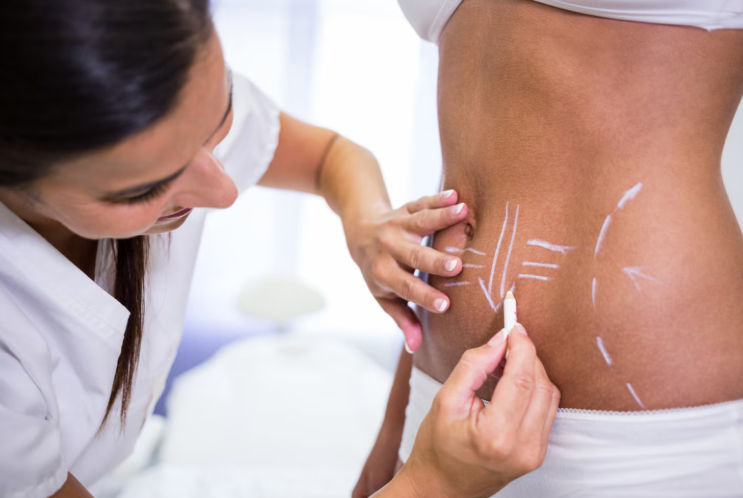
The abdomen is one of the areas most profoundly changed by pregnancy. Stretched skin that has lost elasticity, separated muscles that exercise cannot repair, and fat deposits that resist even disciplined diet and training — these are not signs of insufficient effort. They are the physical consequences of carrying a child, and they are common.
Abdominoplasty — more commonly known as a tummy tuck — is the surgical procedure designed to address all three. This guide covers what the surgery actually involves, who is the right candidate, what recovery looks like, and what makes ZeroSize® in Pune one of India’s most credible choices for this procedure.
What Is Abdominoplasty?
Abdominoplasty is a surgical procedure that:
- Removes excess, inelastic skin from the lower and mid-abdomen — the skin that remains loose and crinkled despite weight loss and exercise
- Repairs diastasis recti — the separation of the paired rectus abdominis muscles that occurs during pregnancy, creating the “pooch” or “mommy tummy” that core exercises cannot fully correct
- Removes or reduces localised fat deposits in the lower abdomen, often in combination with liposuction
- Repositions the navel to sit naturally in its correct anatomical position on the tightened abdominal skin
The result is a flatter, firmer abdomen with repaired core musculature — outcomes that are not achievable through non-surgical interventions when skin laxity and muscle separation are present.
Who Is Abdominoplasty For?
Post-Pregnancy Women
The most common candidates for abdominoplasty are women who have completed their families and are experiencing the physical sequelae of pregnancy: loose abdominal skin, diastasis recti, and lower abdominal fullness that resists conventional approaches.
At ZeroSize®, Dr. Sheetal Londhe — London-trained, DNB – Board Certified Plastic Surgeon, Fellow of the American College of Surgeons (FACS) advises patients to wait until they have completed their families before undergoing abdominoplasty — a subsequent pregnancy after surgery will stretch the repaired muscles and skin, potentially negating the result.
Post-Weight Loss Patients
Significant weight loss — whether through sustained dietary change or bariatric surgery — frequently leaves excess skin that the body cannot reabsorb. The lower abdomen is a particularly common site. Abdominoplasty removes this excess skin, which can also cause hygiene issues and skin fold infections.
Patients with Abdominal Muscle Laxity
Some women experience significant diastasis recti even with moderate pregnancies, or develop abdominal muscle laxity independently. In these cases, the muscle repair component of abdominoplasty — suturing the rectus muscles back to their original position — is the primary therapeutic goal.
Types of Abdominoplasty
Mini Abdominoplasty
Addresses a limited zone of skin excess below the navel. No muscle repair is performed. Appropriate for patients with minimal laxity and good baseline muscle tone. Shorter operating time and smaller incision.
Standard Full Abdominoplasty
The most commonly performed variant. Removes a full ellipse of excess lower abdominal skin, repairs diastasis recti, and repositions the navel. Operating time is typically 2.5 to 3.5 hours under general anaesthesia.
Extended Abdominoplasty
For patients with excess skin extending around the flanks and lower back — typically post-bariatric surgery patients or those with significant weight loss history. The incision extends further around the body to address lateral skin excess.
Lipoabdominoplasty
A combined procedure incorporating liposuction with standard abdominoplasty. The liposuction component — commonly performed using VASER technology at ZeroSize® — addresses the flanks, lower back, and transitions to produce comprehensive circumferential contouring. This is a technically more demanding procedure that requires a surgeon with experience in both modalities.
The Procedure at ZeroSize®
All abdominoplasty procedures at ZeroSize® are performed personally by Dr. Sheetal Londhe — London-trained, DNB – Board Certified Plastic Surgeon, Fellow of the American College of Surgeons (FACS), trained at Broomfield Hospital and the Royal Surrey (UK). There is no delegation to junior surgeons.
- Full surgical consultation with Dr. Sheetal Londhe
- Personalised procedure recommendation based on your anatomy and goals
- Pre-operative investigations (blood work, ECG, imaging as required)
- Detailed preparation instructions and anaesthesia pre-assessment
- Procedure performed under general anaesthesia
- Operating time varies by procedure complexity: typically 2.5–4 hours
- Admission to post-anaesthesia care unit and ward recovery
- Minimum one-night admission at the hospital facility
- Surgical drain(s) placed to prevent fluid accumulation — typically removed at the first follow-up visit
- Surgical compression garment fitted before discharge
- Comprehensive written post-operative care instructions
- Scheduled follow-up visits over the 6-week initial recovery period
Abdominoplasty Recovery: What to Expect
Abdominoplasty recovery is real and requires planning. Set expectations appropriately before surgery.
Week 1–2: Moderate to significant discomfort managed with prescribed analgesia. Limited mobility. You will need assistance with daily activities. Rest is the priority.
Week 2–4: Discomfort resolves significantly. Most patients can resume light activities, desk work, and short walks. You will still be wearing your compression garment.
Week 4–6: Majority of swelling and bruising has resolved. Most patients feel well enough to resume normal daily activities, light social engagements, and non-strenuous work.
6–8 weeks: Medical clearance typically given for return to exercise and all normal activities.
3–6 months: Final result becomes visible as all residual swelling subsides. Scar continues to fade and flatten over 12–18 months.
Dr. Sheetal Londhe provides a personalised recovery protocol at your pre-operative consultation. The timeline above is typical — individual recovery varies.
Diastasis Recti: The Hidden Problem Abdominoplasty Fixes
One aspect of abdominoplasty that surprises many patients is the degree to which repairing diastasis recti changes their daily life — not just their appearance.
Diastasis recti (separation of the paired rectus abdominis muscles) is present in the majority of women following full-term pregnancies. The consequence is not only a protrusion of the lower abdomen but also:
- Weakened core stability, contributing to lower back pain
- Reduced abdominal strength and endurance
- In significant cases, digestive symptoms and pelvic floor dysfunction
The muscle repair component of a full abdominoplasty — suturing the muscles back to their midline — restores core function in addition to aesthetic improvement. Patients frequently report improvements in back pain, exercise capacity, and posture following the procedure.
This functional dimension is one reason abdominoplasty has consistently high patient satisfaction rates and is not, for most post-pregnancy patients, a purely cosmetic decision.
Why Choose ZeroSize® for Abdominoplasty in India?
Female surgeon by design. Abdominoplasty addresses intimate areas of the body. Many women strongly prefer to be operated on by a female surgeon — for reasons of comfort, communication, and trust. Dr. Sheetal Londhe is one of very few plastic surgeons in India who combines female gender with FACS designation and international fellowship training.
Post-pregnancy specialisation. ZeroSize® is specifically designed around the needs of post-pregnancy body reconstruction. Every procedure Dr. Sheetal Londhe performs reflects deep experience with the specific anatomical presentations of post-pregnancy patients.
Pune location, national and international reach. ZeroSize®, Viman Nagar, Pune, serves patients from across Maharashtra — including Mumbai and Navi Mumbai — as well as out-of-state and international patients. The combination of quality and cost-effectiveness makes Pune a preferred destination for patients who would otherwise travel to Mumbai or Delhi.
At what age can I have abdominoplasty?
There is no minimum age, but patients should have completed their families and be at a stable weight before proceeding. Dr. Sheetal Londhe assesses each patient individually at consultation.
Will I lose weight from abdominoplasty?
Abdominoplasty removes skin and a small amount of fat. It is not a weight loss procedure. Patients should be close to their target weight before surgery — ideally within 10–15% — for best results and lowest complication risk.
How long do results last?
The structural results of abdominoplasty — repaired muscles, removed excess skin — are permanent, provided the patient maintains a stable weight and does not undergo subsequent pregnancies. Natural aging continues, but the baseline improvement is lasting.
Is abdominoplasty safe?
All surgery carries risk. Abdominoplasty is a major surgical procedure performed under general anaesthesia. The risk profile is significantly affected by the surgeon’s experience, the facility quality, and the patient’s medical status. Dr. Sheetal Londhe discusses your individual risk profile at consultation.
Start with a Consultation at ZeroSize®, Pune
The right starting point for any post-pregnancy body procedure is an honest, face-to-face consultation. At ZeroSize® in Pune, Dr. Sheetal Londhe spends the time to understand your history, assess your anatomy, and recommend a personalised approach — not a one-size-fits-all procedure.
Book your consultation at ZeroSize® by Grace Aesthetics, Viman Nagar, Pune. Patients from Mumbai and Navi Mumbai are welcome.