
Tummy tuck in Pune (abdominoplasty) is an operation that removes selected excess abdominal skin and may remove some associated fat. Depending on the patient’s anatomy and the agreed surgical plan, it may also include repair of separated or weakened abdominal muscles. It is generally considered for concerns such as persistent loose abdominal skin after pregnancy or substantial weight change—not as a method of weight loss.
This guide explains what abdominoplasty can and cannot address, who may be considered for surgery, the differences between mini and full tummy tuck procedures, preparation, recovery, scars, risks and cost factors in Pune. The right approach depends on an individual examination, medical history and discussion with a qualified plastic surgeon.
Medical review status: Medically reviewed by Dr. Sheetal Londhe · Plastic Surgeon, Pune · NMC Reg. No. 2005042532 · Maharashtra Medical Council Reg. No. 2005/04/2532 · Last reviewed: 15 November 2026
Clinic: ZeroSize® by Grace Aesthetics, Pune
Clinical review status: Review completed by Dr. Sheetal Londhe.
Quick Guide: Tummy Tuck in Pune
- A tummy tuck removes selected excess abdominal skin; some procedures also include removal of fat and repair of abdominal muscle separation.
- It is not a weight-loss operation and does not treat visceral fat around the internal organs.
- A mini tummy tuck and a full tummy tuck address different patterns of skin excess; neither is automatically suitable for everyone.
- Abdominoplasty leaves permanent scars and involves a recovery period and potential complications.
- Future pregnancy or significant weight change may affect the result, so timing should be discussed before surgery.
- Only an in-person clinical assessment can determine whether surgery is appropriate for an individual.
Important: Online information and photographs cannot determine surgical suitability or predict an individual outcome. A consultation should include an examination, review of medical history, discussion of alternatives and a clear explanation of risks.
What Is Abdominoplasty?
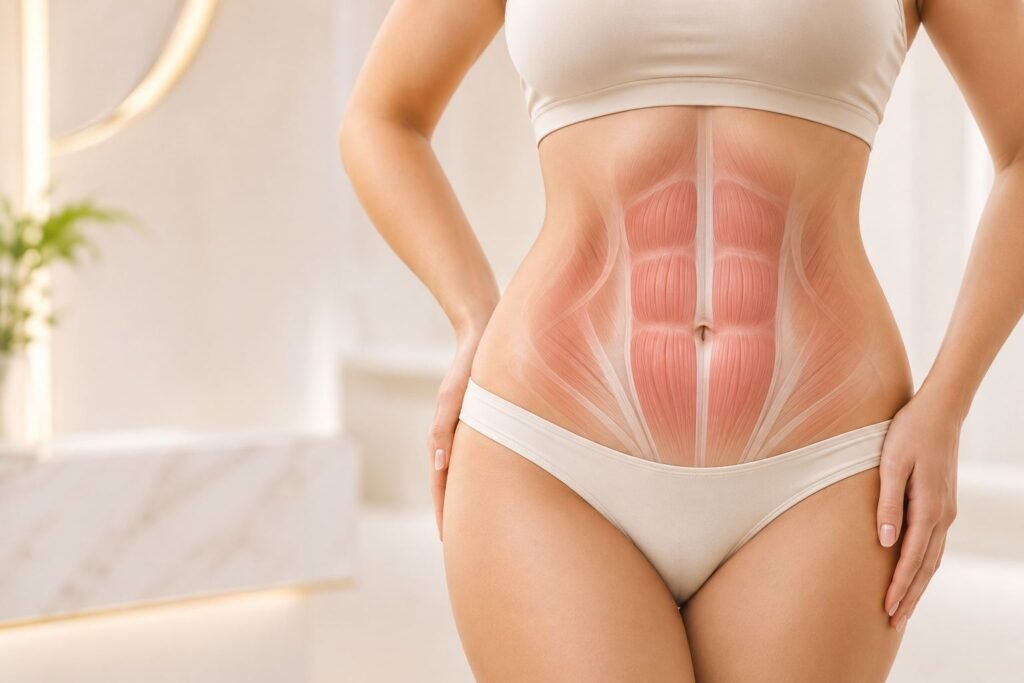
Abdominoplasty is a surgical procedure that removes excess skin and, in selected cases, some fat from the abdominal area. In appropriate patients, the operation may include tightening or repair of the abdominal wall when the rectus muscles have separated (a condition known as diastasis recti). The aim is to address specific anatomical concerns involving loose skin and abdominal wall laxity.
Pregnancy, significant weight fluctuations, ageing, inherited tissue characteristics and previous abdominal surgery can contribute to changes in the abdominal contour. Exercise and weight management support general health, but they cannot remove a substantial fold of excess skin. Whether surgery is suitable depends on the cause of the concern and the patient’s overall health.
What Concerns Can Abdominoplasty Address?
Depending on the technique and examination findings, abdominoplasty may be considered when a patient has:
- Loose or hanging skin in the lower or central abdomen.
- Excess skin remaining after substantial weight loss.
- Abdominal skin laxity after pregnancy.
- Selected abdominal wall laxity or rectus muscle separation, when repair is appropriate.
- A combination of excess skin and localised subcutaneous fat.
Not every abdominal bulge is caused by loose skin or diastasis recti. Visceral fat, a hernia, posture, bowel conditions and other medical factors may contribute. A surgeon should assess the abdomen and refer for further evaluation when needed.
Who May Be Considered for Surgery?
Abdominoplasty may be considered for adults with persistent excess abdominal skin or selected abdominal wall concerns who are in suitable general health and have realistic expectations. In general, planning is easier when weight is reasonably stable and the patient is not anticipating major weight loss or pregnancy in the near future.
During consultation, the surgeon may assess medical fitness, weight history, abdominal anatomy, skin quality, nicotine exposure, personal circumstances and expectations. Some health conditions, medications, clotting risks or nicotine use may increase surgical risk or mean that surgery should be delayed or avoided. Do not stop prescribed medication on your own; any changes must be agreed with the treating team.
Types of Abdominoplasty
The term tummy tuck includes several surgical approaches. The choice depends on the distribution of excess skin, abdominal wall findings, previous scars, body proportions and the patient’s health.
Full Tummy Tuck
A full abdominoplasty generally addresses a wider area of the abdomen, including skin excess above and below the navel. It commonly involves a low horizontal incision and an incision around the navel so that the abdominal skin can be repositioned. Repair of separated abdominal muscles may be included when clinically indicated and agreed in the surgical plan.
Mini Tummy Tuck
A mini abdominoplasty may be considered when excess skin is mainly limited to the lower abdomen and is relatively modest. It usually involves a more limited skin excision and may not require repositioning of the navel. It does not address all upper abdominal skin laxity or every form of muscle separation. It is appropriate only for selected anatomy.
Extended and Fleur-de-Lis Abdominoplasty
An extended abdominoplasty may be discussed when skin excess extends around the flanks. A fleur-de-lis approach may be considered for selected patients with excess skin in both vertical and horizontal directions. These approaches involve different and sometimes longer scar patterns, which need careful discussion.
Lipoabdominoplasty
In selected patients, liposuction may be combined with abdominoplasty to address particular areas of subcutaneous fat and contour. Combining procedures changes the operative plan and may affect blood supply, risk, duration and recovery. It is not automatically suitable or safer for every patient.
Mini vs Full Abdominoplasty: Key Differences
| Feature | Mini tummy tuck | Full tummy tuck |
|---|---|---|
| Typical area addressed | Selected lower abdominal skin excess | Broader abdominal skin excess, often above and below the navel |
| Navel repositioning | Often not required, depending on technique | Commonly required |
| Incision | Usually more limited lower abdominal incision | Usually longer low abdominal incision; may include an incision around the navel |
| Muscle repair | May be considered in selected cases | May be included when clinically indicated |
| Suitability | Limited lower abdominal skin excess | More extensive abdominal skin laxity |
| Recovery and risks | Depend on the exact operation and individual health | Depend on operative extent and individual health |
This is a general comparison, not a self-selection tool. A physical examination is needed to determine which approach, if any, is appropriate.
Abdominoplasty vs Liposuction
Liposuction removes selected deposits of subcutaneous fat. It does not remove a substantial fold of loose skin or repair separated abdominal muscles. A tummy tuck removes selected excess skin and may include abdominal wall repair; liposuction may be added in selected cases.
Read our Liposuction: Complete Guide to Procedure, Suitability, Recovery and Risks and the 360° VASER Liposuction treatment page for more information.
How Is the Operation Performed?
Abdominoplasty is generally performed under general anaesthesia in an appropriately equipped surgical facility. The exact steps depend on the planned technique. Broadly, the surgeon makes the agreed incision, lifts abdominal skin and tissue, addresses the abdominal wall if muscle repair is part of the plan, removes planned excess skin and closes the incisions. In a full tummy tuck, the navel is commonly brought through a new opening in the repositioned skin.
Dressings and a compression garment may be used. Temporary drains may be placed in some cases. The need for drains, length of surgery, hospital stay and aftercare vary. Ask who will perform each part of the operation, where it will take place and how urgent complications would be managed.
Preparing for Consultation and Surgery
Provide the team with information about medical conditions, previous operations, all medicines and supplements, allergies, clotting or bleeding history, nicotine use, alcohol consumption, recent weight changes and future pregnancy plans. The surgeon may request examination, blood tests or other investigations based on your health and planned procedure.
Follow the surgical team’s instructions about fasting, medicines, bathing, transport and support at home. Do not independently stop prescribed medicines. Arrange transport and practical help for the initial recovery period as advised.
Recovery: What to Expect
Recovery varies with the type and extent of abdominoplasty, whether muscle repair or liposuction is included, general health and wound healing. The outline below is general education, not a fixed return-to-work or exercise schedule.
First Few Days
Soreness, tightness, bruising, swelling and difficulty standing fully upright may occur. Dressings, a compression garment and sometimes drains may be used. Gentle movement is commonly encouraged according to the surgical team’s instructions.
First Two Weeks
Mobility usually improves gradually, but fatigue, swelling and tightness may continue. Attend planned reviews and follow instructions about wound care, bathing and garment use. Avoid driving if medicines impair alertness or you cannot safely control the vehicle.
Weeks Three to Six and Beyond
Some patients gradually resume routine activities during this period. Heavy lifting and strenuous exercise may remain restricted. Swelling continues to settle and scars mature over subsequent months. Follow your surgeon’s individual advice rather than a generic online timeline.
Understanding Surgical Scars
Abdominoplasty leaves permanent scars. A full tummy tuck commonly leaves a horizontal scar low across the abdomen and a scar around the navel. Mini, extended and fleur-de-lis approaches have different scar patterns. Scar visibility and healing vary. Follow wound-care and sun-protection instructions, and ask your surgeon before starting silicone products, massage or other scar treatments.
Risks and Possible Complications
Tummy tuck surgery is a major operation and carries risks. Possible complications include bleeding or haematoma, infection, seroma, delayed wound healing, wound separation, skin or fat tissue injury, unfavourable scarring, changes in sensation or persistent numbness, pain, asymmetry, contour irregularity, problems with the belly button, blood clots, pulmonary or cardiac complications, anaesthesia-related complications and possible revision surgery.
Individual risk depends on health, nicotine exposure, body weight, previous operations, the extent and duration of surgery and whether other procedures are combined. Ask which risks are most relevant to you, how they may be reduced and what arrangements are in place if a complication occurs.
When to Seek Urgent Medical Help
After surgery, sudden breathlessness, chest pain, fainting, coughing blood or one-sided leg swelling or pain requires urgent medical assessment. Contact the surgical team promptly for fever, spreading redness, increasing wound discharge, rapidly worsening pain or wound opening. In an emergency, seek emergency medical care.
Long-Term Expectations After Surgery
Removed skin does not grow back in the same way, but the abdomen continues to change with ageing, weight fluctuation, pregnancy and normal tissue changes. Maintaining a reasonably stable weight may help preserve the contour, but it cannot prevent every future change. No particular long-term appearance can be guaranteed.
What Determines Abdominoplasty Cost in Pune?
The cost of tummy tuck in Pune depends on the type and complexity of surgery, the amount and location of excess skin, whether muscle repair or liposuction is included, anaesthesia, facility charges, investigations, medicines, garments, follow-up and individual medical needs. A reliable estimate requires consultation and assessment. Ask for a written, itemised estimate explaining what is included and excluded.
Consultation at ZeroSize® in Pune
At ZeroSize® by Grace Aesthetics in Viman Nagar, Pune, Dr. Sheetal Londhe assesses abdominal skin excess, fat distribution, abdominal wall features, medical history and the patient’s goals before discussing possible options. A consultation can help clarify whether a mini or full abdominoplasty, another approach, a staged plan or no surgery is appropriate. Patients considering tummy tuck in Pune can discuss their concerns, medical history and suitable treatment options during an individual consultation.
Dr. Sheetal Londhe
Plastic Surgeon | DNB (General Surgery) | DNB (Plastic Surgery) | Fellow, American College of Surgeons (FACS, USA) | Aesthetics training in London
ZeroSize® by Grace Aesthetics, Viman Nagar, Pune
To discuss your concerns and arrange an individual consultation, use the enquiry form below.
Frequently Asked Questions
Is a tummy tuck a weight-loss procedure?
No. A tummy tuck removes selected excess abdominal skin and may include removal of some fat and repair of abdominal wall separation. It is not a treatment for obesity or a substitute for weight management.
Does a tummy tuck remove stretch marks?
Some stretch-marked skin may be removed if it lies within the area of skin excision, often on the lower abdomen. Stretch marks outside the removed skin remain; abdominoplasty does not remove all stretch marks.
Does a tummy tuck repair diastasis recti?
Muscle repair may be included in selected procedures when examination confirms abdominal wall separation and the surgeon considers repair appropriate. Not every tummy tuck includes muscle repair, and abdominal bulging can have other causes.
What is the difference between a mini and full tummy tuck?
A mini tummy tuck generally addresses a more limited area of lower abdominal skin excess. A full tummy tuck usually addresses a broader area and commonly involves repositioning the navel. The appropriate operation depends on the pattern of skin excess and abdominal wall findings.
Can liposuction be combined with a tummy tuck?
It may be considered in selected patients, but the decision depends on anatomy, health, operative scope and risk. A combined operation is not suitable for everyone.
Can I become pregnant after a tummy tuck?
Pregnancy may be possible after abdominoplasty, but it can stretch the abdominal skin and wall and change the surgical result. If you are planning a future pregnancy, discuss timing with your surgeon before deciding on surgery.
How long is recovery after a tummy tuck?
Recovery varies with the operation, muscle repair, combined procedures, health and work demands. Routine activities may resume gradually, while strenuous exercise and heavy lifting may be restricted for longer. Follow your surgical team’s instructions.
Are tummy tuck scars permanent?
Yes. Scars are permanent, although their colour and texture often change as they mature. Scar length, visibility and healing vary.
Can a tummy tuck correct a C-section overhang?
Some patients with a lower abdominal skin fold or scar-related contour concern after a C-section may be assessed for abdominoplasty. The cause of the overhang, existing scar, skin quality, abdominal wall and overall health need examination.
Will a tummy tuck result last permanently?
Removed skin does not return, but ageing, pregnancy and significant weight changes can alter the abdomen over time. Stable weight may help maintain the contour, but no particular appearance can be guaranteed.
How do I choose a plastic surgeon for tummy tuck surgery in Pune?
Check the surgeon’s recognised plastic-surgery qualifications and registration, experience with abdominoplasty, facility and anaesthesia arrangements, consent process, complication-management plan and follow-up access. Ask who will perform the operation and who will look after you if a problem develops.
Related Body-Contouring Guides
- Tummy Tuck (Abdominoplasty) treatment page in Pune
- Tummy Tuck Before and After in Pune: Results, Recovery and Long-Term Expectations
- Liposuction: Complete Guide to Procedure, Suitability, Recovery and Risks
- 360° VASER Liposuction treatment page
Medical References and Further Reading
- American Society of Plastic Surgeons (ASPS): Tummy Tuck
- ASPS: Tummy Tuck Candidates
- ASPS: Tummy Tuck Procedure
- ASPS: Tummy Tuck Recovery
- ASPS: Tummy Tuck Risks and Safety
- NHS: Tummy Tuck (Abdominoplasty)
- ISAPS: Abdominoplasty
Medical information notice: This article is intended for general patient education. It does not provide a diagnosis or individual treatment recommendation and does not replace consultation with a qualified plastic surgeon. Surgical suitability, expected outcomes, recovery and risks must be assessed for each patient. Individual results vary, and no particular result is guaranteed.
4 Responses