Nose Job (Rhinoplasty)

Enhance Facial Balance & Improve Nasal Function

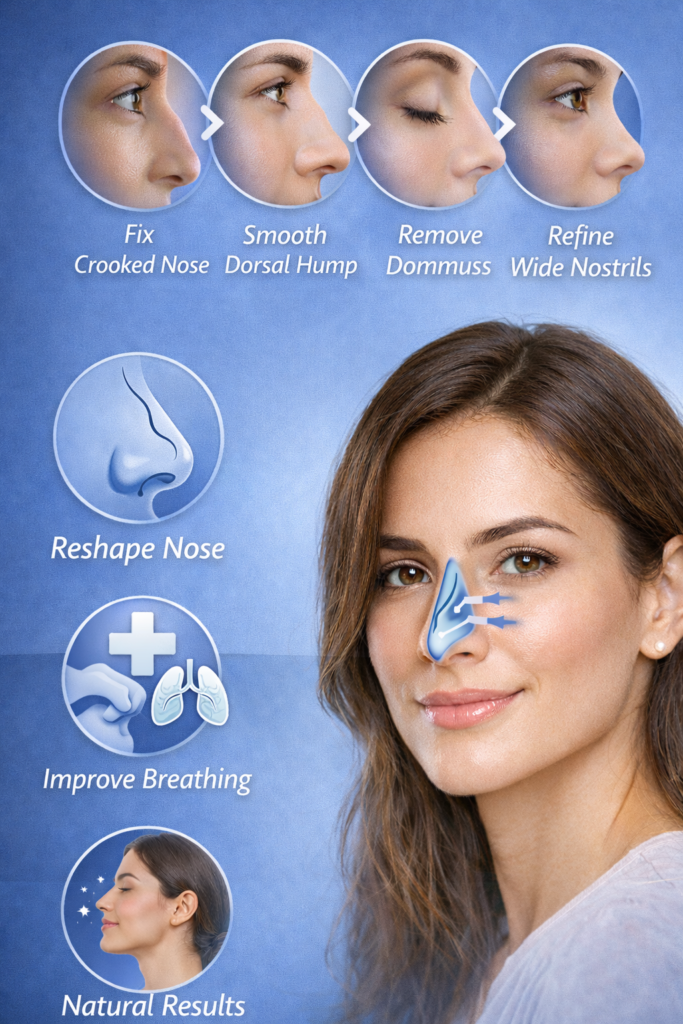
The nose plays a central role in facial harmony and breathing function. Concerns such as a crooked nose, hump, wide nostrils, drooping tip, or breathing difficulty can affect both appearance and confidence. Nose Job (Rhinoplasty) is a surgical procedure designed to reshape the nose while maintaining natural facial balance and improving nasal function when required.

Rhinoplasty can be performed for cosmetic enhancement, functional correction, or both, delivering refined, natural-looking, and long-lasting results.

Key Highlights

Procedure Options

Cosmetic Rhinoplasty

Reshapes the nose to improve size, symmetry, and overall appearance.

Functional Rhinoplasty

Corrects breathing problems caused by a deviated septum or structural issues.

Revision Rhinoplasty

Improves or corrects results from a previous nose surgery.

Ethnic Rhinoplasty

Enhances nasal appearance while preserving ethnic identity and features.

Untitled design (37)Untitled design (38)
TREATMENTS

Advanced Rhinoplasty & Nose Reshaping Treatments

Nasal shape and structure are influenced by genetics, injury, and aging. While non-surgical options may offer temporary improvement, surgical rhinoplasty provides precise and permanent correction.

At ZeroSize®, Rhinoplasty is performed using advanced surgical techniques and detailed facial analysis to ensure results that are balanced, natural, and tailored to individual facial features.

Treatment Focus Areas

0 +

Clients

0 k+

Happy Patients

0 +

Cosmetic Procedures Offered

TREATMENT

Anti Aging Treatment

SERVICES

Our Special Services

Benefits of Nose Job (Rhinoplasty)

Rhinoplasty is a transformative procedure that enhances facial harmony while also addressing functional nasal concerns. By reshaping the nose to suit individual facial features, it creates a more balanced and refined appearance, often leading to increased confidence and comfort in daily life.

In addition to cosmetic improvement, rhinoplasty can correct internal structural issues that interfere with breathing, making it both an aesthetic and medically beneficial procedure.

Rhinoplasty helps to:

Speak to Our Friendly &
Knowledgeable Adviser:

Experience World-Class Cosmetic Treatment Led by a Board-Certified Plastic & Reconstructive Surgeon

With advanced surgical skill, international training, and a patient-centred approach, we provide results that are safe, natural, and beautifully tailored to your needs.

Frequently Asked Question

Which Nasal Deformities Can Be Corrected with Rhinoplasty Surgery?

Rhinoplasty can address a wide range of aesthetic and functional nasal concerns, helping improve both appearance and breathing.

  • Size-related concerns: Correction of a nose that appears too large or too small
  • Length issues: Reshaping a short or long nose for better balance
  • Tip deformities: Refinement of bulbous, boxy, pinched, droopy, or overly upturned (piggy) tips
  • Dorsal irregularities: Reduction of a dorsal hump or correction of a saddle nose
  • Columella concerns: Adjustment of a hanging or retracted columella
  • Alar issues: Narrowing a wide base or reshaping the alar margins
  • Width corrections: Slimming a broad nose or wide mid-section
  • Complex deformities: Straightening a crooked, twisted, or deviated nose
  • Congenital conditions: Correction of certain birth-related nasal deformities
  • Trauma-related changes: Restoring shape after injury or sports accidents
  • Functional issues: Improving breathing by correcting a deviated septum

You may be a good candidate for rhinoplasty if you are in good health, emotionally prepared, and looking to improve the shape, proportion, or function of your nose.

  • Age Criteria: Generally recommended for girls above 16 and boys above 18, once facial growth is complete
  • Good Physical Health: You should be medically fit to undergo surgery and healing
  • Emotional Readiness: Prepared for the process, recovery, and temporary changes during healing
  • Realistic Expectations: Clear understanding of what the procedure can and cannot achieve

Common Reasons for Rhinoplasty:

  • Nose appears too large, too small, crooked, or out of balance with facial features
  • Desire to refine the tip, bridge, or overall shape
  • Breathing difficulties due to structural issues like a deviated septum
  • Snoring or sleep-related breathing concerns

Rhinoplasty can significantly improve the appearance and function of the nose, but it’s important to understand its limitations to set realistic expectations.

  • Technically Complex Procedure: Rhinoplasty requires a high level of surgical skill and aesthetic judgment, making surgeon expertise crucial.
  • Improvement, Not Perfection: Every nose heals differently, and results are influenced by individual anatomy and tissue behavior.
  • Functional Balance: Changes are carefully limited to preserve proper breathing and nasal function.
  • Cartilage Memory: Nasal cartilage may slightly shift over time, which can influence the final shape during healing.
  • Possibility of Revision: A small percentage of patients (around 1–5%) may need a revision procedure for further refinement.

A pre-surgery consultation is a crucial step in planning a safe and successful rhinoplasty. It helps your surgeon understand your goals, evaluate your nose and facial structure, and design a personalized treatment plan.

Key Benefits of a Consultation:

  • Customized Surgical Plan: Your surgeon assesses nose shape, skin quality, breathing function, and facial balance to create a tailored approach.
  • Safety & Suitability Check: Ensures you are medically fit and that the procedure is appropriate for your needs and expectations.
  • Realistic Expectations: You’ll understand achievable results, possible risks, limitations, and recovery timelines.
  • Visual Guidance: You may review before-and-after cases or preview possible outcomes to better visualize results.
  • Clear Cost Breakdown: Get an accurate estimate, including surgery, tests, and post-operative care.
  • Build Trust & Confidence: A chance to connect with your surgeon and feel confident about your decision.

What to Prepare Before Your Consultation:

  • Your concerns and desired outcomes (reference photos can help)
  • Any past surgeries, nasal injuries, allergies, or breathing issues
  • Current medications, supplements, smoking, or alcohol habits
  • Photos of your nose (for online consultations)

What the Surgeon Will Evaluate:

  • Nasal structure, including bone, cartilage, and skin thickness
  • Overall facial harmony based on your features
  • Breathing function and any septal deviation
  • General health and fitness for surgery

Online Consultation Benefits:

  • Convenient and time-saving—no need to travel
  • Expert evaluation based on shared photos
  • Guidance and realistic outcome visualization

Rhinoplasty can be performed using several advanced techniques, each chosen based on your nasal structure, goals, and the complexity of correction needed.

Open Rhinoplasty
This approach involves a small external incision, allowing the surgeon full visibility of the nasal structures. It is ideal for complex cases that require precise reshaping, though recovery may take slightly longer.

Closed Rhinoplasty
All incisions are made inside the nostrils, leaving no visible scars. It is best suited for minor corrections and offers quicker healing with less swelling.

Preservation Rhinoplasty
A more conservative technique that maintains the natural nasal structures while reshaping. It focuses on preserving cartilage and support for a more natural look and faster recovery.

Structural Rhinoplasty
This method uses cartilage grafts to rebuild or strengthen the nasal framework. It is commonly used in more advanced cases to ensure long-term stability and shape.

Piezo (Ultrasonic) Rhinoplasty
A modern technique that uses ultrasonic energy for precise bone reshaping with minimal damage to surrounding tissues. It results in less bruising, reduced swelling, and a smoother recovery.

Benefits of Piezo Rhinoplasty:

  • High precision with minimal trauma to soft tissues
  • Reduced bruising, swelling, and internal scarring
  • Faster recovery and improved patient comfort
  • Ideal for correcting dorsal humps, wide bridges, or asymmetry
  • Can be combined with other rhinoplasty approaches

Who Benefits Most from Piezo Rhinoplasty?
Patients who need detailed bone contouring, such as correction of a hump, deviation, or wide nasal bridge, often benefit the most. It is typically performed using an open approach for better precision.

Why Isn’t Piezo Used Everywhere?
It requires specialized training, advanced equipment, and higher costs compared to traditional methods, which is why not all surgeons or clinics offer it.

Rhinoplasty can be classified in different ways depending on the purpose, number of procedures, and individual anatomical features.


A. Based on Number of Surgeries

Primary Rhinoplasty
This is the first-time procedure performed to reshape the nose for cosmetic improvement or to correct structural issues.

Revision (Secondary) Rhinoplasty
Done when the results of a previous surgery need correction or refinement.

Common Reasons for Revision:

  • Breathing difficulties or airway obstruction
  • Droopy or pinched nasal tip
  • Over-corrected or uneven shape
  • Collapse of cartilage or nasal structure

B. Ethnic Rhinoplasty Types

Ethnic rhinoplasty focuses on enhancing the nose while preserving natural facial identity and cultural features.

  • Caucasian Rhinoplasty: Often includes hump reduction and refinement of a narrower nasal structure
  • Hispanic Rhinoplasty: Addresses variations in bridge height and tip shape, depending on subtype
  • African Rhinoplasty: Improves wider nasal base, thicker skin, and less projected tip
  • Asian Rhinoplasty: Enhances a flatter bridge and broader tip, often using cartilage grafts
  • Middle Eastern Rhinoplasty: Commonly focuses on reducing dorsal humps and refining tip projection

C. Special Purpose Rhinoplasty

Septorhinoplasty
Combines cosmetic reshaping with correction of a deviated septum to improve breathing.

Rejuvenation Rhinoplasty
Targets age-related changes such as drooping tip, cartilage weakening, or thickened skin to restore a more youthful appearance.

Rhinoplasty is a customized nose reshaping procedure performed in a surgical setting, usually under anesthesia, to improve appearance, function, or both. The exact technique depends on your nasal structure and treatment goals.

Pre-Surgery Preparation
Before the procedure, your surgeon may recommend blood tests, scans, and a general health evaluation to confirm you are fit for surgery. Any medical conditions such as diabetes or high blood pressure should be properly managed in advance. You may also be advised to avoid smoking, alcohol, and certain medicines or supplements before surgery.

Before the Procedure
On the day of surgery, your medical history, allergies, current medications, and any recent illness are reviewed. The surgeon discusses your goals, examines your nose carefully, and plans the surgical approach. The anesthesia team also evaluates you before the operation begins.

During Surgery
Rhinoplasty is usually performed under general anesthesia, although minor corrections may sometimes be done with local anesthesia. The surgery generally takes about 1.5 to 3 hours, depending on the complexity.

The surgeon may use either an open technique, which involves a small incision between the nostrils for better visibility, or a closed technique, where all incisions are hidden inside the nose. The nasal bones, cartilage, and soft tissues are then carefully reshaped. If needed, grafts, sutures, cartilage trimming, bone correction, or septum correction may also be done to improve structure and breathing.

Closure and Support
Once the reshaping is complete, the incisions are closed with fine sutures. A nasal splint and sometimes internal support or packing may be placed to protect the new shape and support healing.

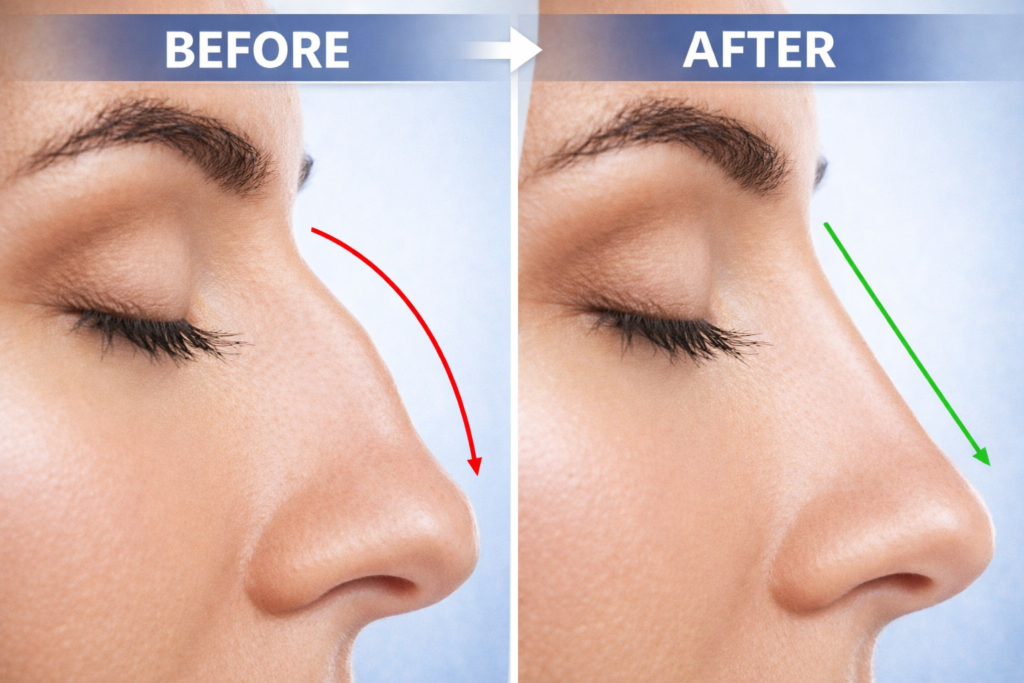
Rhinoplasty results appear gradually as swelling reduces and the nose heals over time. While you’ll notice changes early, full refinement takes several months.

Recovery Timeline:

  • Immediately After Surgery: A visible change in nose shape is noticeable right away, though swelling is present.
  • First Week: Major swelling begins to subside, and early results start to show.
  • First Month: Most of the swelling reduces, revealing the primary outcome.
  • 6–8 Months: The nasal tip becomes more refined and defined.
  • 8–12 Months: Final shape, contours, and full definition are achieved.

What Affects the Timeline?

  • Type of rhinoplasty (open or closed)
  • Whether it’s a primary or revision procedure (revision may take longer)
  • Extent of correction performed
  • Individual healing ability and skin thickness
  • How well post-operative instructions are followed
  • Surgeon’s technique and experience

Proper care after rhinoplasty is essential to reduce swelling, support healing, and achieve the best results. Your recovery plan will include the following key guidelines:


1. Medications

  • Take all prescribed medicines exactly as advised
  • Complete the full course of antibiotics and pain relief medications

2. Diet

  • Start with liquids and soft foods after surgery
  • Maintain a healthy, nutritious diet to support healing

3. Sleeping Position

  • Keep your head elevated at about a 45° angle for the first week
  • Avoid sleeping on your face or turning onto your stomach

4. Physical Activity

  • Light walking can usually begin the same day (if advised)
  • Return to office work in about 6–8 days
  • Resume cardio after around 2 weeks
  • Avoid gym or heavy activities for at least 4 weeks

5. Recovery Expectations

  • Swelling and bruising are normal and improve within 1–2 weeks
  • The nasal tip may remain swollen longer and refines gradually
  • Mild bleeding or numbness may occur temporarily

6. Local Care & Hygiene

  • Apply cold compress around the eyes for the first 48 hours
  • Use nasal lubricants if prescribed to support internal healing
  • Keep lips moisturized to prevent dryness
  • Do not touch or remove nasal splints or tapes yourself

7. Bathing & Face Care

  • You can bathe from the next day, but avoid wetting your face or nose
  • Clean your face gently using a sponge or damp cloth
  • Avoid pools, saunas, or hot tubs for at least 4 weeks

8. Expected Results

  • Initial changes are visible soon after surgery
  • Swelling continues to reduce over 1–2 months, improving shape

9. Follow-Up Visits

  • Typically scheduled at 2–3 days, 7 days, 15 days, and 1 month

10. Long-Term Monitoring

  • Additional follow-ups at 1, 3, and 6 months
  • Watch for warning signs like redness, fever, severe pain, or unusual bleeding and report them promptly

Rhinoplasty is generally safe when performed by an experienced surgeon, but like any surgical procedure, it carries some potential risks. Understanding them helps you make an informed decision.


Common Side Effects

  • Temporary swelling and bruising around the nose and eyes
  • Nasal congestion or a blocked feeling in the initial days
  • Mild discomfort or pain, usually controlled with medication

Possible Surgical Complications

  • Bleeding or hematoma (uncommon with proper care)
  • Infection at the incision site
  • Delayed healing or, rarely, skin-related complications
  • Visible or internal scarring
  • Asymmetry or dissatisfaction with the final shape
  • Breathing difficulties if internal structures are affected

Rare Anesthesia-Related Risks

  • Reaction to anesthesia
  • Temporary nausea, vomiting, or confusion after surgery

How to Minimize Risks

  • Choose a qualified, experienced rhinoplasty surgeon
  • Ensure the procedure is done in a well-equipped, accredited facility
  • Follow all pre-operative and post-operative instructions carefully
  • Attend all follow-up visits for proper monitoring

Recovery after rhinoplasty happens in phases. While you can return to normal daily activities fairly quickly, full healing and final results take several months.


Rhinoplasty Recovery Timeline

  • Day 1–3:
    You may feel mild discomfort, similar to a cold. This is usually well-managed with medications and cold compresses.
  • Week 1:
    Swelling and bruising are at their peak and then start improving. The external splint and stitches are typically removed around day 5–7.
  • Day 7–10:
    Most patients can return to office work and routine daily activities. Traveling is also generally possible.
  • Week 2–4:
    Visible swelling continues to reduce, and light activities can be resumed.
  • 1 Month:
    Around 70–80% of swelling subsides, and the nose begins to take a more defined shape.
  • 6–12 Months:
    Final contours and tip refinement become fully visible as healing completes.

Follow-Up Care

  • Initial visits within the first week for splint checks and guidance
  • Regular follow-ups at 1 month, 3 months, and 6 months to monitor progress

Synonyms for Nose Job (Rhinoplasty):

Nose job surgery is commonly referred to by several medical and cosmetic terms depending on the technique used or treatment approach. These include Rhinoplasty, Nasal Reshaping Surgery, Nose Reshaping Procedure, Cosmetic Nose Surgery, Nasal Contouring Surgery, Nose Correction Surgery, Aesthetic Rhinoplasty, Functional Rhinoplasty, Septorhinoplasty, Nasal Reconstruction Surgery, Nose Refinement Procedure, Nasal Structure Correction, Nose Enhancement Surgery, Nasal Remodeling Procedure, Surgical Nose Job, Non-Surgical Rhinoplasty (Liquid Nose Job), Nose Straightening Surgery, Nasal Profile Correction, Nose Sculpting Procedure, and Advanced Nasal Rejuvenation Surgery.